From Dud to Diamond: How the Collectibles Nobody Wanted Are Now the Ones Everyone's Chasing
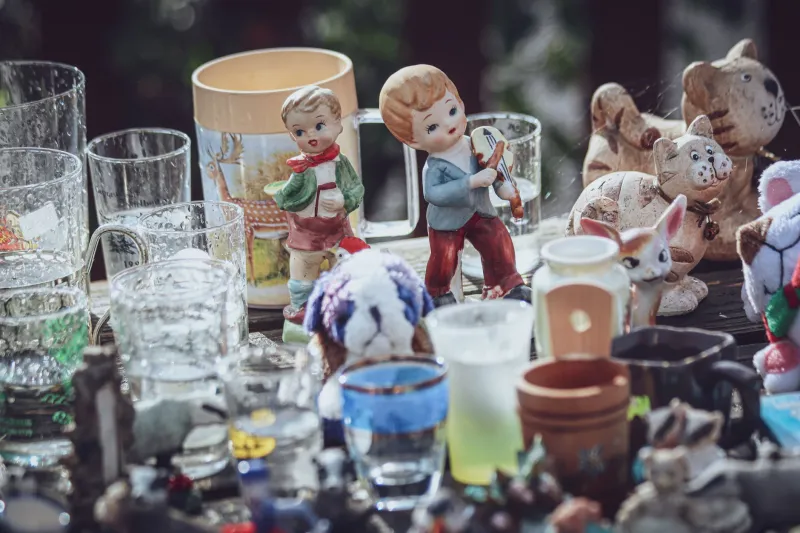
There's a certain kind of collector who loves to tell the story. You know the one — the guy who bought a box of "worthless" stuff at a yard sale in the early 2000s, shoved it in his garage, and forgot about it until the internet told him he was sitting on something serious. Those stories feel like luck. But the truth is messier and way more interesting than that.
Collectible value doesn't move in a straight line. It loops, dips, reverses, and sometimes doubles back on itself in ways that make no logical sense until, suddenly, they do. And the items that get written off the hardest? Those are often the ones with the most dramatic second acts.
Why Things Get Dismissed in the First Place
There are a few reliable reasons why a collectible ends up in the bargain bin of history. Sometimes it's pure overproduction — manufacturers flooded the market during a peak moment of interest and killed the scarcity that drives value. Think early-90s sports cards. The hobby was exploding, companies printed billions of cards, and the bubble burst fast. For years, those cards were practically worthless. Garage sale fodder. Now? Certain graded specimens from that same era are pulling serious money because the nostalgia cycle caught up and the people who grew up with those cards have disposable income.
Other times, dismissal comes from cultural stigma. Something gets labeled uncool — too niche, too childish, too campy — and the mainstream passes it by. Vinyl records went through this. So did vintage video games. So did a lot of things that are now considered prestige collectibles.
And sometimes, items just hit at the wrong moment. Poor marketing, bad timing, a competing product that stole the spotlight. The item wasn't actually bad — it just never got its fair shot.
Real Reversals Worth Paying Attention To
Let's talk specifics, because the pattern becomes way clearer with examples.
Original Transformers figures from the early 1980s were toys. Played with, broken, tossed. Nobody was sealing them in cases. By the late 90s, they were curiosities. By the mid-2000s, with the movie franchise kicking into gear, complete boxed examples started commanding hundreds — then thousands — of dollars. The irony is that the people who actually loved Transformers as kids often sold or trashed theirs, while the items that survived in collections became exponentially more valuable.
McDonald's Happy Meal toys are another case study in reversal. For decades, these were the definition of throwaway. Cheap plastic, mass-produced, designed to be forgotten. Now entire eBay storefronts are dedicated to them. Certain runs — especially sealed sets from the late 80s and 90s — move for prices that would've seemed absurd fifteen years ago. The cultural nostalgia machine caught up, and suddenly those toys aren't junk anymore.
Beanie Babies had their comeback narrative complicated by the meme-ification of their original bubble, but specific rare variants and error pieces have quietly maintained real collector value. The mass-produced ones? Still mostly worthless. But the outliers? Whole different story.
The lesson across all of these isn't that everything comes back. It's that the right things do — and figuring out which is which is the actual skill.
The Anatomy of a Comeback
So what separates the items that genuinely revive from the ones that stay buried? A few consistent factors tend to show up:
Generational handoff. When the generation that grew up with something reaches their 30s and 40s — with actual money to spend — demand spikes. This is almost mechanical at this point. Whatever was popular when today's millennials were 8 to 12 years old is either already in a boom or approaching one. Whatever Gen Z was into in early childhood is probably 10 to 15 years from its revival moment.
Scarcity that wasn't obvious at the time. Overproduction doesn't necessarily kill long-term value if most of the production got used, broken, or thrown away. Sports cards from the early 90s are everywhere, but mint condition, graded examples from that era are genuinely scarce. The junk wax era produced billions of cards — but almost nobody treated them carefully.
Cultural recontextualization. Sometimes a piece of media, a documentary, a viral post, or even a meme reframes something that was once dismissed. Suddenly it's ironic, then it's sincere, then it's valuable. The internet has dramatically accelerated this cycle.
Limited original distribution. Regional releases, short production windows, retailer exclusives — these create natural scarcity that only becomes apparent in retrospect.
How to Hunt for Today's Future Diamonds
This is where it gets practical. If you're trying to identify current collectibles that might be tomorrow's comeback stories, here's a rough framework:
Look for the overshadowed. What was released around the same time as something massively popular, and got completely ignored because of it? The sidekick product, the competing line that lost, the spinoff nobody bought — these are worth a second look.
Find the culturally stigmatized. What's currently considered too nerdy, too niche, or too uncool? Not everything in this category will turn around, but the ones with genuine craftsmanship or limited production runs are worth tracking.
Watch what younger collectors are casually mentioning. Not the hyped stuff — the throwaway references. The things they mention in passing as part of their childhood that nobody's really talking about yet. That's often where the next wave starts.
Check production numbers against survival rates. Something produced in huge quantities might still be effectively scarce in collectible condition if the item was designed to be used and discarded. Packaging matters enormously here — sealed or near-mint versions of mass-market items can be dramatically rarer than the raw numbers suggest.
Patience Is the Actual Investment
Here's the uncomfortable truth: if you're trying to play the comeback angle, you're signing up for a long game. These reversals don't happen on a quarterly schedule. We're usually talking years, sometimes decades. That means buying things you actually like, storing them properly, and not panicking when they sit without moving.
The collectors who win on comeback stories aren't the ones who timed the market perfectly. They're the ones who were interested enough in the item to hold it through the years when nobody cared — and patient enough to still have it when the world finally caught up.
So next time you're at a flea market, an estate sale, or scrolling through a liquidation listing and you spot something that makes you think who would even want this — pause for a second. That reaction might be exactly the signal worth paying attention to.