Ghost Stores, Real Money: The Surprising Collector's Market for Defunct Retailer Memorabilia
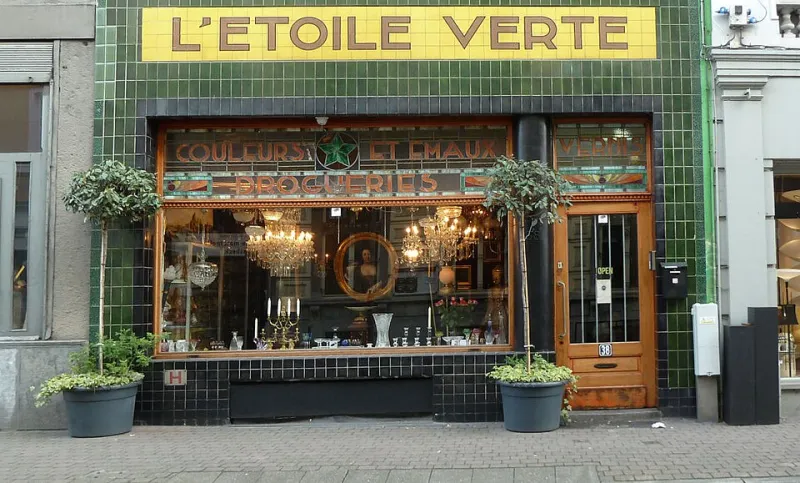
Photo: Carolus, CC BY-SA 3.0, via Wikimedia Commons
There's a certain kind of sadness that hits when you drive past a dead mall. Those long-empty anchor stores, the faded signage, the food court that used to smell like Sbarro and Orange Julius — it's a very specific flavor of American nostalgia. And as it turns out, that nostalgia is worth something.
Over the last several years, merchandise and memorabilia tied to defunct US retailers has quietly developed into a legitimate collectibles category. We're talking shopping bags, employee uniforms, loyalty cards, in-store signage, branded merchandise, and even old receipts. Items that once seemed like throwaway junk are now showing up in online auctions, vintage shops, and collector communities — sometimes fetching prices that would've seemed absurd ten years ago.
So what's going on here, and is it worth paying attention to?
The Retailers People Actually Miss
Not every closed store inspires collector interest. The ones that do tend to share a few traits: they had strong brand identities, they were culturally embedded in everyday American life for a significant stretch of time, and their closures felt abrupt or emotionally resonant.
The heavy hitters in this space right now include:
Blockbuster Video — Perhaps the most nostalgia-saturated brand of the bunch. Membership cards, VHS rental stickers, branded merchandise, and even employee name tags have all sold online. The irony of Blockbuster's fall to streaming has made its memorabilia feel almost poetic to collectors.
Circuit City — Electronics retail nostalgia is real. Shopping bags, gift cards, and branded accessories from Circuit City regularly appear on eBay and Etsy, with some items pulling $20-50 depending on condition and rarity.
Kmart and Sears — Both still technically exist in limited form, but their cultural peak was the '80s and '90s. Blue Light Special memorabilia, Sears catalog items, and branded giveaways from that era are increasingly sought after.
Toys "R" Us — The brand made a partial comeback, but the original chain's closure in 2018 created a wave of collector interest in Geoffrey the Giraffe merchandise, original store signage, and vintage shopping bags.
Service Merchandise, Caldor, Ames, and Bradlees — These regional chains are less universally known but carry intense local nostalgia in the areas where they operated. Hyperlocal collector demand can push prices surprisingly high for the right audience.
Why Younger Collectors Are Into This
Here's the twist that surprises a lot of people: a significant chunk of the demand for defunct retailer memorabilia is coming from millennials and younger Gen Z buyers who either barely remember these stores or have only encountered them through internet nostalgia content.
For this group, the appeal isn't purely personal memory — it's aesthetic and cultural. The graphic design of a '90s Kmart bag, the chunky logo typography of a Circuit City receipt, the VHS-era color palette of a Blockbuster card — these things carry a visual identity that feels distinctive and, frankly, kind of cool in a retro way. It's the same impulse that drives vintage band tee culture or the resurgence of Y2K fashion.
Social media has accelerated this. Dead mall content on YouTube regularly pulls millions of views. TikTok accounts dedicated to retail nostalgia have built large followings. When younger audiences encounter this content and feel something — even secondhand nostalgia for a place they never shopped — some of them start looking for physical artifacts to connect with that feeling.
Where to Actually Find This Stuff
If you're curious about sourcing defunct retailer memorabilia, here's where to start:
eBay is the most obvious and active marketplace. Search the store name plus keywords like "vintage," "bag," "card," "sign," or "memorabilia." Set up saved searches and alerts — good pieces move fast.
Etsy skews toward the more curated and aesthetically interesting pieces. Sellers there tend to price higher, but you'll find items that have been cleaned up and presented well.
Facebook Marketplace and local buy/sell groups are underrated for this category. Estate sales and garage sales in suburban areas — especially near former mall locations — occasionally surface genuine finds from people who just want to clear space and have no idea what they have.
Thrift stores in smaller cities and towns still occasionally have old branded merchandise that hasn't been picked over by resellers. It takes patience and regular visits, but the prices are often low enough that even modest resale value makes it worthwhile.
Flea markets remain a solid hunting ground, particularly in regions with high concentrations of former mid-century retail. The Midwest and mid-Atlantic states, in particular, are fertile territory.
What's Actually Worth Money vs. What Isn't
Not everything with a defunct logo on it is valuable. Condition matters enormously — a pristine, unused Blockbuster shopping bag is worth more than a crumpled one. Rarity matters too. Items that were produced in limited quantities, given away as promotions, or represent a specific era of a brand's history tend to command stronger prices.
Signage and display pieces from actual store locations are among the most valuable, but they're also harder to authenticate and transport. Smaller, everyday items — gift cards, loyalty cards, branded pens, employee buttons — are more accessible and still carry real collector interest.
The sweet spot for most buyers right now seems to be items from the late '80s through mid-2000s. That era hits the nostalgia window for the largest group of active adult collectors while also being old enough that surviving examples in good condition are genuinely uncommon.
A Market Worth Watching
This isn't a fad. The cultural appetite for retail nostalgia shows every sign of deepening as more chains close and the memory of physical retail shopping becomes increasingly distant for younger generations. What feels like a niche today has a pretty clear growth trajectory.
If you're already collecting in adjacent categories — vintage advertising, pop culture ephemera, Americana — defunct retailer memorabilia is a natural extension worth exploring. And if you're new to collecting entirely, it's one of the more accessible entry points: prices are still reasonable for most items, the community is enthusiastic, and the sourcing process — digging through estate sales and thrift stores — is genuinely enjoyable.
Sometimes the most interesting collectibles aren't the ones everyone's already chasing.